ঢাকাবৃহস্পতিবার , ১৩ অগাস্ট ২০২৬
Drug addiction is neither a crime nor merely a lack of willpower; rather, it is a treatable chronic illness that has profound impacts on an individual’s mental health and family life. Drug addiction has a close relationship with various mental health disorders, a condition medically known as “dual diagnosis.” Alongside professional treatment, family awareness, emotional support, and a positive family environment are crucial to ensuring the sustainable recovery of individuals struggling with addiction.
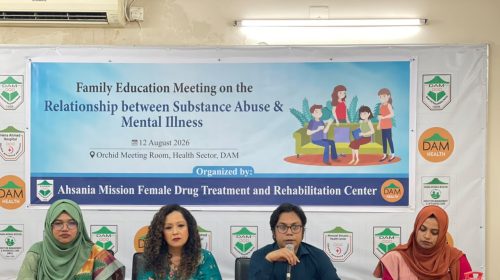
The remarks were made by psychiatrist Dr. Rahanul Islam, Central Drug Addiction Treatment Center (Dhaka), as the keynote speaker at a special “Family Education Meeting” organized for the family members of clients undergoing treatment at the Dhaka Ahsania Mission Women’s Drug Addiction Treatment and Rehabilitation Center in Shyamoli, Dhaka, on Wednesday, 12 August.
Dr. Rahanul Islam said that people may sometimes turn to drugs as a way of coping with severe emotional distress, depression, anxiety, or other mental health crises. On the other hand, prolonged or excessive drug use can disrupt normal brain functioning and chemical balance, potentially leading to serious mental health problems, including psychosis. When drug addiction and mental illness occur together, he noted, treatment and rehabilitation become more complex.
He said that such a dual crisis may lead to sudden agitation, aggressive behavior, confusion, or other emergencies. During such critical moments, family members should remain calm and patient rather than becoming frightened or agitated. Under no circumstances should patients be beaten, humiliated, or subjected to inhumane practices such as being chained or restrained. Professional medical assistance should be sought promptly when necessary.
Emphasizing that the family’s responsibility increases after a patient returns home following rehabilitation or treatment, he said, “Returning home from rehabilitation is not the end of treatment; rather, it marks an important new phase in the long-term recovery process.” During this period, repeatedly blaming the patient for past mistakes, humiliating them, or excessively suspecting them may increase psychological stress and heighten the risk of returning to drug use or relapse.
Speakers said that families should ensure a safe, supportive, stress-free, and drug-free environment to help patients maintain their recovery. Regular follow-up, adherence to prescribed medication, counseling, and active participation by family members should also continue in accordance with healthcare professionals’ advice.
The meeting was attended by the parents and family members of clients currently receiving treatment at the center. Also present were Rakhi Ganguly, Senior Psychologist, Health Sector, Dhaka Ahsania Mission; Layla Yasmin, Center Manager; Afsana Khatun and Farzana Deros, Case Managers; and the center’s counselors.
The meeting focused on raising family members’ awareness about drug addiction, mental health, and appropriate responses during emergencies, post-treatment care, and the role of families in preventing relapse. The speakers also responded to various questions from family members and emphasized the importance of families working as partners with the treatment team throughout the recovery and rehabilitation process.