ঢাকাবুধবার , ৫ অগাস্ট ২০২৬
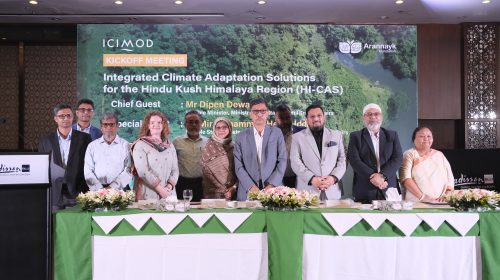
Arannayk Foundation, in collaboration with the International Centre for Integrated Mountain Development (ICIMOD), today launched the Integrated Climate Adaptation Solutions for the Hindu Kush Himalaya Region (HI-CAS) project through a national kick-off meeting.
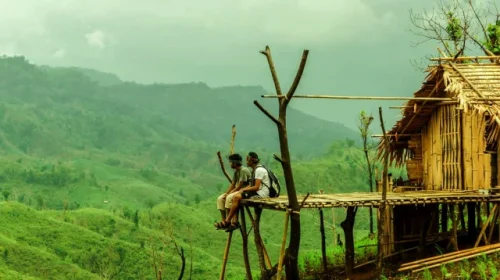
The regional initiative, implemented across Bangladesh, Nepal, and Bhutan, aims to strengthen climate resilience among vulnerable communities in mountain ecosystems. In Bangladesh, the project will be implemented in Bandarban Sadar (Sualok Union) and Khagrachari (Matiranga), targeting Indigenous Peoples and Local Communities (IPLCs) facing growing climate risks and environmental degradation.
Funded by Global Affairs Canada and supported by ICIMOD, the project promotes Integrated Adaptation Solution Packages (IASPs), combining springshed management, agrobiodiversity, renewable energy, and enabling policy support, including improved access to climate finance for women and IPLCs.
Speaking as the Chief Guest, Dipen Dewan, Minister for Chittagong Hill Tracts Affairs (MoCHTA), said, “Degradation of spring systems is now directly affecting water security and agricultural productivity in the hill districts. This project shows how nature-based solutions and community engagement can restore water systems while strengthening livelihoods.”
He added that successful approaches could be replicated across other parts of the Chittagong Hill Tracts.
Mir Mohammed Helal Uddin, State Minister of MoCHTA, attended the event as Special Guest. He said, “Rainfall patterns are becoming more irregular, dry periods longer, and spring water flow is declining. This project’s focus on springshed management, agrobiodiversity, and renewable energy is aligned with national climate priorities.”
He stressed that local communities must be engaged as active stakeholders to ensure long-term sustainability.
On behalf of the Secretary of MoCHTA, Additional Secretary Mohd. Monirul Islam attended the event.
In her opening remarks, Jessica Emily Fullwood-Thomas, Senior Project Coordinator, HI-CAS, ICIMOD, said, “the project brings together practical adaptation solutions that respond to local realities, from restoring springsheds to strengthening community institutions. The goal is not only to reach communities, but to ensure they benefit, influence decisions, and drive long-term resilience.”
In his welcome speech, Dr Mohammad Abdul Motaleb, Executive Director of Arannayk Foundation, said, “this project builds on our long-standing work in the Chittagong Hill Tracts, where ecosystem restoration and community engagement must go hand in hand.
Through HI-CAS, we aim to strengthen climate resilience while improving livelihoods for the people who depend directly on these natural systems.”
Md. Emranul Islam, Program Officer and HI-CAS Project Focal, Arannayk Foundation, in his presentation, informed that the HI-CAS project is expected to directly benefit around 4,000 people in Bangladesh and indirectly reach more than 15,000, with a strong focus on women, Indigenous communities, and marginalized groups.
A Gender Equality and Social Inclusion (GESI) framework is integrated across all interventions to ensure inclusive participation, equitable access to resources, and strengthened local leadership.
The project will also generate evidence from pilot initiatives to inform policy and support scaling of climate adaptation solutions across similar ecological zones.
With this launch, Bangladesh moves to strengthen climate resilience in its hill regions through ecosystem-based, community-driven approaches that address both environmental and livelihood challenges.
Among others, Fadang Tang Randal, Member of the Chittagong Hill Tracts Regional Council, Shefalika Tripura, and Mya Mya Nue Marma were present at the event.