
ঢাকারবিবার , ২৮ জুন ২০২৬
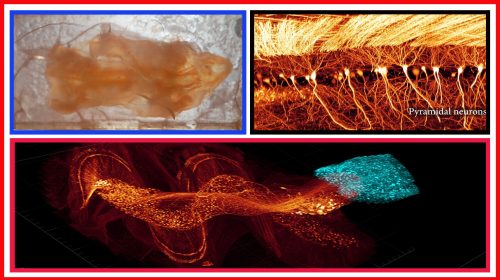
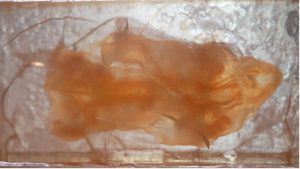
Hasan Mahmud: Chinese scientists have achieved a breakthrough in medical science and neuroscience. A research team at the Shenzhen Institute of Advanced Technology (SIAT) has invented a revolutionary technology that can make any tissue or biological sample completely transparent. Using this technology, known as the “Transparent Embedding Solvent System” (TESOS), it is now possible to make any organ of the body as clear as glass, allowing for precise observation of its internal structure. The findings of this research were published on June 19 in the internationally renowned science journal, Nature Methods.
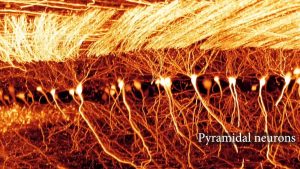
Innovative Working Process of TESOS Technology:
Usually, body tissues are opaque, making it extremely difficult to observe fine structures under a microscope. Existing technologies were ineffective for large samples (such as an entire brain) because the samples remained flexible, making delicate slicing or imaging challenging. In this new method, researchers first remove water and lipids from the tissue. They are then placed in a special transparent solution and embedded in a type of resin that makes the tissue exceptionally strong and transparent. Compared to traditional methods, this technology is capable of creating a structure that is 150 times stronger, allowing for clear observation of the finest parts of the tissue without any deformation.
The Minds Behind the Research:
A team of scientists led by researchers Lu Bing and Chen Shi at the Shenzhen Institute of Advanced Technology (SIAT) successfully invented the “Transparent Embedding Solvent System” technology. Experts in neuroscience, biomedical engineering, and computer science from this institution, under the Chinese Academy of Sciences (CAS), collaborated to complete this complex project.
Milestone Success in Research:
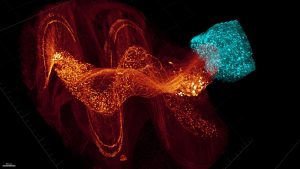
As part of the study, scientists successfully captured the world’s first 3D image of a mouse’s entire brain at a 30-nanometer resolution. Processing such massive image data was a major challenge for the scientists. To solve this, the researchers developed a new data-compression algorithm that plays a groundbreaking role in storing, transporting, and analyzing the vast data. Experts believe that this collective effort and scientific vision at the Brain Imaging Lab has ushered in a new and reliable era in modern medical science. They state that this technology now makes it possible to map the entire neural network of the brain quickly and accurately.
Explaining the significance of the research, Lu Bing, a lead researcher at SIAT, said, “Our invented TESOS technology is not just a chemical process; it has created a new perspective for observing biological tissue structures. Previously, we lost many important neural connections while slicing tissue for examination. Now, without cutting an organ, we can precisely view every fine internal structure through 3D imaging. We believe this will greatly accelerate neuroscience research in the coming days.”
Radical Changes in Medical Science:
Currently, for pathological examinations, tissue is sliced into very thin layers. The limitation of this method is that many complex connections or 3D arrangements of cells are lost, which hinders the identification of causes of diseases. However, through TESOS technology, it is possible to obtain detailed information about cell structures by making the entire organ transparent and observing it in 3D without slicing it. This will usher in a new and accurate era in diagnosing neurological diseases like Alzheimer’s and Parkinson’s, identifying various tumors, and evaluating the effectiveness of drugs.
Future Prospects and Significance:
Researchers at the Shenzhen Institute of Advanced Technology have stated that this technology will not be limited to the laboratory. It will play a highly effective role in treating complex diseases like cancer in the future. By obtaining 3D images of entire organs, doctors will gain a clearer understanding of cell arrangements, which will make medical treatments much more modern and personalized.
Experts believe that this integration of modern technology will keep scientists several steps ahead in uncovering the complex mysteries of the human body. It will take modern pathology and biomedical research to a new height, which will be instrumental in inventing life-saving new drugs and therapies in the future.
Source: Nature Methods and Shenzhen Institute of Advanced Technology (SIAT).