ঢাকাবুধবার , ১১ নভেম্বর ২০২৬
Civil society leaders from the Global South have called on developed countries at COP31 to fulfil their climate finance obligations under Article 9.1 of the Paris Agreement and ensure predictable, accessible and grant-based public finance for climate-vulnerable countries. They stressed that the Global Goal on Adaptation must not remain confined to setting indicators and making political commitments. Adequate finance, technology and implementation capacity must be ensured to translate these commitments into action and deliver resources directly to local communities. They also called for a substantial increase in new and additional funding for the Fund for Responding to Loss and Damage, simplified access procedures, faster disbursement and direct support for affected countries and communities.
The civil society leaders warned that climate finance must not further increase the debt burden of developing countries. Loans and private investment cannot be treated as substitutes for developed countries’ obligations to provide public climate finance. Countries and institutions that have contributed most to the climate crisis must bear a greater share of the financial responsibility. They called for fair taxation of major polluters and increased contributions to public climate finance. They emphasised that COP31 must deliver not merely financial pledges, but also transparency, accountability and a clear implementation roadmap to ensure that pledged funds are actually disbursed and reach the countries and communities most affected by climate change.
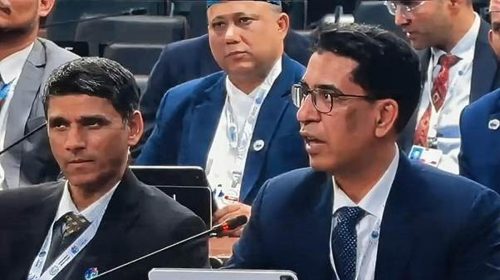
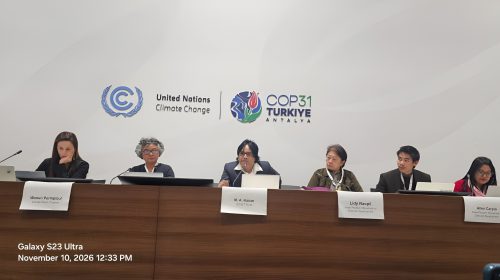
Today, 10 November 2026, speakers from the Global South raised these demands at the side event titled “Investment, Imperatives & Prospects for Climate Finance: Perspectives from Global South” was held at Side Event Room 5 at the COP31 venue in Antalya, Türkiye, at 11:30 AM local time. Civil society leaders from different countries of the Global South presented their demands and proposals on climate finance, adaptation, and addressing climate-induced loss and damage. The event was jointly organized by the Asian Peoples’ Movement on Debt and Development (APMDD), Philippines, COAST Foundation, Bangladesh, LDC Watch, Nepal, and Climate Watch Thailand. Speakers included Lidy Nacpil, Coordinator of APMDD; M. A. Hasan of COAST Foundation, Bangladesh; Mariana of Oxfam; Wanun Permpibul of Climate Watch Thailand; and Allen John Carpio of APMDD, the Philippines. The event was moderated by Reshma Shakya of LDC Watch, Nepal.
Lidy Nacpil, from APMDD, said that climate finance must not remain limited to promises. Funding must reach affected countries quickly, easily and effectively through international climate funds and financing mechanisms. Transparent and accountable use of the resources received must also be ensured so that funding reaches affected communities directly through effective programmes and projects. At the same time, governments in the Global South must prioritise climate finance in their national budgets and policies rather than simply waiting for international climate funds.
Wanun Permpibul from Climate Watch Thailand said that adopting the 59 indicators under the Global Goal on Adaptation is not enough; their implementation must reduce climate vulnerability and strengthen the resilience of livelihoods, food, water and ecosystems. She stressed that adaptation targets require adequate finance, technology and capacity, and that the commitment to triple adaptation finance by 2035 must clearly define the baseline, funding sources, providers, delivery timeline and type of finance.
Mariana from Oxfam said that effective and practical solutions to the climate crisis must be developed by giving due importance to scientific research, local languages and cultures. The financial requirements, quality and effectiveness of climate action must be ensured at every stage, from planning to implementation. Existing plans must be regularly reviewed and updated, while financing and implementation processes must be made more effective through evidence, data and research.
M. A. Hasan from COAST Foundation, Bangladesh, said that international discussions on climate finance frequently feature large financial pledges. However, the success of climate finance cannot be measured solely by the amount of money promised. It is essential to ask who will provide the money, where it will come from, when it will be delivered, under what conditions, who will receive it, and what tangible changes it will bring. He said that countries of the Global South are not asking for charity; they are demanding climate justice. We cannot accept a situation in which countries that have contributed the least to the climate crisis are forced to take on more debt simply to protect their own people from its impacts. We cannot accept climate finance that further increases our countries’ debt burdens. Nor can we accept a financial system that protects the interests of lenders while disregarding the needs of ordinary people.