ঢাকারবিবার , ২৫ অক্টোবর ২০২৬
Nurul Islam Moni, MP, Chief Whip of the National Parliament, has emphasized that ensuring the mental well-being of young people, alongside their physical health, is essential to building a prosperous, developed, and humane Bangladesh. He stated that families, educational institutions, and the government must work together to protect young people’s mental health, raise awareness, and help them cope with mental stress. He added that ensuring the mental well-being of the younger generation would enable the country to harness their talent, creativity, and energy to accelerate national development and progress.
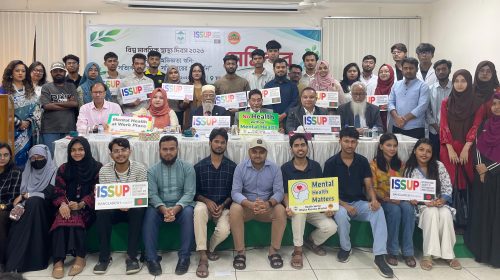
He made these remarks as the chief guest at a seminar held at 11:00 a.m. on Sunday (25 October) at the auditorium of Dhaka Ahsania Mission in Dhanmondi, Dhaka, marking World Mental Health Day. The seminar was organized by the Mayer Hashi Mental Health Service Centre to raise awareness about mental health and draw the attention of policymakers. This year’s theme was “Let’s Hear Life Experiences: Real Stories, Real Change.”
Dr. S. M. Ziauddin Haider, Special Assistant to the Prime Minister on Health Affairs (with the rank of a State Minister), attended the seminar as a special guest. He emphasized that mental well-being is essential for everyone. He noted that if a mother experiences psychological stress and anxiety during pregnancy, it can also affect her unborn child. Therefore, special attention must be given to a mother’s mental health from pregnancy onward to ensure the development of a healthy generation.
The seminar was chaired by Professor Golam Rahman, President of Dhaka Ahsania Mission, and moderated by Rakhi Ganguly, Senior Psychologist at the organization. Professor Dr. Saifun Nahar Sumi, Head and Director of the National Institute of Mental Health, and Professor Dr. Abu Tayeb Abu Ahmed, Vice-President of Dhaka Ahsania Mission also present at the event. The speakers emphasized that behind every statistic on mental health problems is a person and a family who often face the crisis alone and in silence. They noted that many people still do not recognize mental illness as a medical condition, instead viewing it as a sign of weakness, personal failure, the result of sin, or the influence of jinn, ghosts, or witchcraft. Fear of being socially labelled as “mad” also discourages many people from seeking treatment. Families, too, often conceal mental health conditions. As a result, people experiencing mental health problems are deprived of the treatment and support they need.
They also emphasized the importance of listening to people who have experienced mental health challenges and ensuring that their voices are heard in mental health services and policy discussions. In particular, maternal mental health issues, including prenatal and postnatal depression, still do not receive adequate attention in society. A mother’s mental well-being is closely linked to a child’s development and the overall well-being of the family. The “Mayer Hashi initiative serves as a reminder of this reality.
In his keynote presentation, Iqbal Masud, Director of the Health and Nutrition Sector at Dhaka Ahsania Mission, said that nearly one in six adults in Bangladesh experiences some form of mental health problem. However, around 92% of them do not receive any treatment. He explained that mental health services in Bangladesh have traditionally been concentrated in hospitals in urban areas. Institutions such as the National Institute of Mental Health and Hospital in Dhaka and Pabna Mental Hospital play a major role in providing care. However, there is a significant shortage of community-based follow-up and day-care services alongside hospital-based treatment. Depression, anxiety, and substance addiction, along with suicide, are making the situation even more challenging.
Citing data from the World Health Organization (WHO), Iqbal Masud said that 4,714 people died by suicide in Bangladesh in 2021, averaging nearly 13 deaths per day. He noted that the problem particularly affects young people and women. However, he emphasized that suicide is preventable. Raising awareness about mental health, ensuring accessible and quality treatment, and creating a supportive social environment are essential to preventing suicide.
The speakers stressed that mental health must be recognized as an important part of public health. They highlighted the need to break social stigma and misconceptions about mental health, expand access to treatment and care, and take effective initiatives at the policy level.