ঢাকাবৃহস্পতিবার , ৬ অগাস্ট ২০২৬
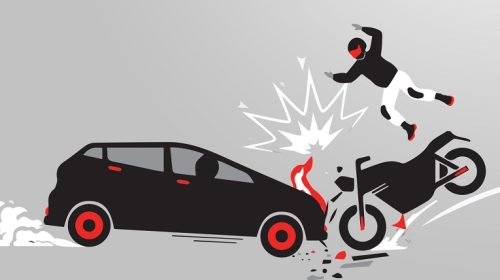
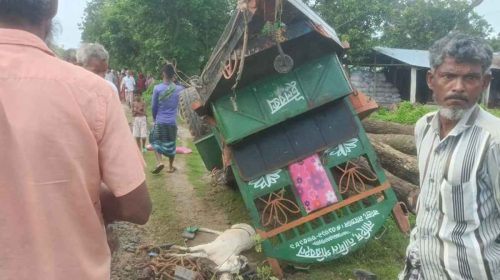
Every year, during Eid, terrible road crush occur on the country’s highways, claiming many lives. During Eid journey, vehicles often become reckless on the roads. Alongside buses, motorcycles and other vehicles make race on the highways. Pedestrians also move carelessly. As a result, the number of road crashes increases abnormally during Eid every year, and the same situation occurred during the last Eid. According to data of the Bangladesh Road Transport Authority (BRTA), during the eight-day of the last Eid-ul-Fitr, at least 132 people were death and 208 injured in 110 road crush occurred across the country.
During Eid-ul-Fitr in 2023, 239 people died in road crashes over a 15-day period. According to BRTA sources, the number of deaths in 2024 increased by nearly 19 percent compared to 2023.Among the various reasons behind the increase in road crashes, one of the major causes is the absence of an effective road safety law and its proper enforcement in the country; there is also a lack of an appropriate system and accountability.
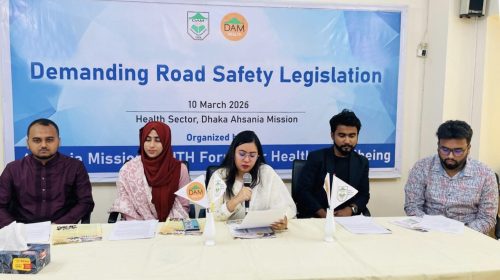
In this context, the Youth Forum of the Dhaka Ahsania Mission, which works on road safety, has put forward nine recommendations to reduce road crashes during the upcoming Eid Journey.
Today, Tuesday (10 March), Marjana Muntaha, Coordinator of the Ahsania Mission Youth Forum for Health and Wellbeing, presented these recommendations in a press release.
The recommendations are as follows:
1, Since most road crashes occur due to excessive speed, a comprehensive guideline for speed management on roads must be formulated and implemented as soon as possible to control vehicle speed. At the same time, during Eid, all drivers must be strictly required to follow the given speed limit guidelines for motor vehicles.
2, Both motorcycle riders and passengers must ensure the use of standard-quality helmets while traveling during Eid. In addition, an enforcement guideline regarding helmet use should be formulated and implemented as soon as possible.
3, Vehicles lack of proper fitness certification must be prohibited from operating on the roads.
4, Drivers’ working hours must be strictly monitored to ensure that they get adequate rest during Eid journey. Tired drivers not only increase the risk to their own lives but also create dangerous situations for passengers.
5, During Eid journey, the movement of all types of battery-operated vehicles and rickshaws, including Nasimons, Karimons, and Tempus, must be prohibited on major and important roads.
6, Strict monitoring must be enforced to ensure that no one drives after consuming alcohol or intoxicating substances, and the relevant rules and regulations must be properly implemented.
7, In addition to regulating transportation, appropriate measures must be taken to ensure the safe crossing and movement of pedestrians. For example, footpaths should be kept free of street vendors. Pedestrian overpasses must be made pedestrian-friendly, and pedestrians should be encouraged to use footpaths and overpasses. In addition, pedestrians should be made aware of safe practices, such as avoiding mobile phone use while crossing and using zebra crossings.
8, The relevant authorities responsible for enforcing road discipline must be held accountable;
9, finally, a comprehensive road safety law must be formulated and implemented following the globally recognized Safe System approach. Only then road fatalities will be reduced, allowing all road users to celebrate Eid and other festivals safely with their families.