








As healthcare systems worldwide struggle with rising rates of cancer, cardiovascular disease, and chronic conditions—while simultaneously facing growing cybersecurity threats—artificial intelligence (AI) has become a critical enabler of resilient, data-driven solutions. Bangladeshi researcher Md Masum Billah is emerging as a significant contributor at this intersection, advancing AI methodologies that improve medical decision-making, reduce diagnostic delays, and support secure, scalable digital infrastructures.
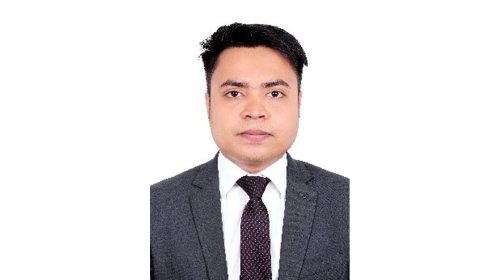
Md Masum Billah earned his Master of Engineering in Electrical and Computer Engineering from Lamar University, where he developed strong expertise in machine learning, deep learning, and applied data analytics. Alongside his completed Master’s training, he is currently engaged in further graduate studies focused on digital secured health care system design. His research trajectory reflects a consistent focus on practical AI systems—models designed not only for accuracy, but also for deployment in real-world, resource-constrained environments.
A core pillar of his work is AI-assisted disease detection. In cardiovascular health, his paper “Heart Disease Prediction Using Support Vector Machine (SVM)” demonstrates how machine learning can analyze structured clinical data to identify high-risk patients early, supporting preventive care and reducing long-term healthcare costs. Given that heart disease remains the leading cause of death globally, such predictive tools carry clear public-health relevance.
In oncology, Md Masum Billah has contributed multiple studies addressing different cancer types and data modalities. His work “Breast Cancer Classification Using LightGBM and Support Vector Machine” evaluates both ensemble learning and kernel-based models, showing how carefully chosen algorithms can enhance diagnostic reliability while maintaining interpretability—an essential requirement for clinical adoption. In dermatological imaging, his study “Skin Cancer Classification Using NASNet” applies advanced deep learning architectures to skin lesion images, highlighting how transfer learning can support early melanoma detection despite limited labeled medical data.
His research also extends to chronic and musculoskeletal disorders, which often receive less technological attention despite their high societal burden. In “Lower Back Pain Prediction Applying Different Classification Algorithms Using WEKA”, he systematically compares classical machine learning models to support data-driven assessment of spinal conditions, offering decision support for clinicians treating long-term pain and mobility disorders.
Complementing his medical AI work, Md Masum Billah has made impactful contributions to intelligent cybersecurity and distributed AI systems, with three peer-reviewed papers published in 2025 at the IEEE 7th Symposium on Computers & Informatics. These studies address network intrusion detection, IoT security, and decentralized reputation tracking using TinyML, focusing on reducing analyst workload, improving detection accuracy, and enabling scalable decision systems. While centered on security, these works reinforce transferable AI principles—robust learning under limited data, efficiency at the edge, and system-level reliability—that are directly relevant to healthcare AI deployment.
What distinguishes Md Masum Billah’s research is its deployment-oriented vision. Across healthcare and cybersecurity domains, he emphasizes scalable architectures, computational efficiency, and integration into operational systems rather than isolated algorithmic benchmarks. Looking ahead, his work supports the development of AI-enabled screening tools, computer-aided diagnosis systems, remote health monitoring platforms, and secure intelligent networks. By addressing both medical intelligence and the reliability of underlying digital systems, Md Masum Billah’s contributions have national importance, positioning his research as directly beneficial to public health, technological resilience, and long-term innovation.
Md Masum Billah graduated from the Department of Electrical and Electronic Engineering, University of Rajshahi in 2019. He earned a master’s degree in Electrical and Computer Engineering from Lamar University, USA, in 2025. He is currently pursuing another master’s degree in Industrial Engineering at the same university.