



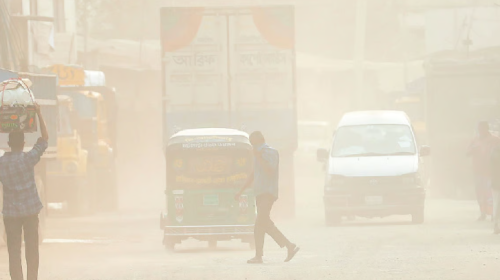
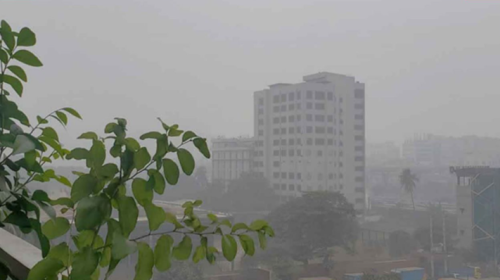

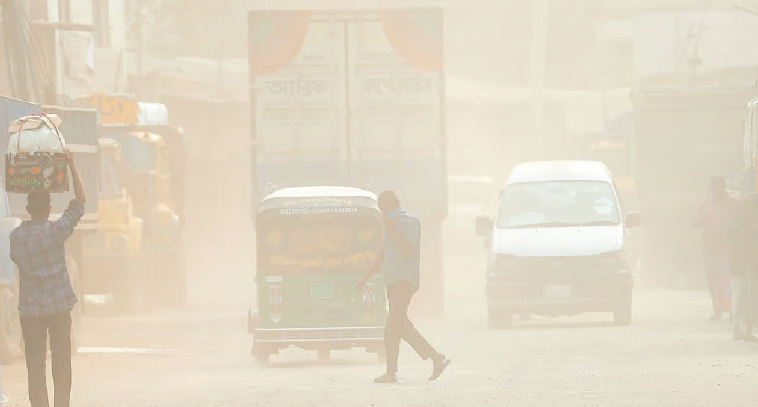
Air pollution has become one of South Asia’s gravest and most enduring crises, claiming nearly one million lives every year and threatening the region’s long-term financial and social development, according to a new World Bank report. The burden is most acute across the Indo-Gangetic Plains and the Himalayan foothills, where almost one billion people in Bangladesh, Bhutan, India, Nepal and Pakistan are exposed daily to air pollution levels far exceeding World Health Organization guidelines.
The report, ‘A Breath of Change: Solutions for Cleaner Air in the Indo-Gangetic Plains and Himalayan Foothills,’ describes a region trapped in a cycle of toxic air, rising disease and mounting economic losses. Premature death, chronic illness, reduced labour productivity and soaring healthcare cost together are estimated to drain close to 10 percent of South Asia’s gross domestic product each year. The findings highlight that air pollution is no longer just an environmental concern but a major public health emergency and a structural obstacle to sustainable growth.
According to the World Bank’s analysis, the sources of pollution are deeply embedded in everyday life and economic activity. Many households still rely on solid fuels for cooking and heating, releasing harmful particulate matter indoors and outdoors. Industries often use outdated, weak technologies powered by fossil fuels and biomass. Roads are dominated by old, poorly maintained vehicles, while agricultural practices like burning crop residues and the widespread mismanagement of waste further intensify pollution levels. These emissions do not remain confined to cities or industrial zones; they spread across borders and landscapes, affecting rural villages, dense urban centers and fragile mountain ecosystems alike.
Despite the scale of the challenge, the report delivers a message of cautious optimism. It argues that South Asia’s air pollution crisis is solvable, provided governments act decisively and in coordination. Many of the solutions already exist and are economically viable. Expanding access to electric cooking, modernising industrial boilers and kilns, accelerating the shift to clean and electric transport, improving agricultural and livestock waste management and strengthening recycling and waste segregation systems could significantly cut emissions while opening new ways for investment and job creation.
The report underscores that clean air must be pursued as part of a broader transformation rather than through isolated intervention. Reducing emission at their source is critical, but so is strengthening health systems to protect vulnerable populations and investing in education to raise public awareness. Long-term success, the World Bank notes, will depend on strong institutions, effective enforcement of environmental regulation, market-based incentives that encourage cleaner technologies and sustained cooperation among South Asian countries, given the transboundary nature of air pollution.
Martin Heger, Senior Environmental Economist at the World Bank, said the findings make clear that clean air should be seen as a powerful economic and social investment, not a cost. He said that households, farmers and businesses stand to benefit economically over time from cleaner technologies through lower health expenses, higher productivity and greater efficiency. Governments, he added, play a crucial role in guiding this transition through sound policies, targeted incentives and long-term planning.
Echoing this view, Anne Jeannette Glauber, the World Bank’s Practice Manager for Environment in South Asia, said achieving clean air will be difficult but achievable. She stressed that meaningful progress needs consistent collaboration at local, national and regional levels, backed by adequate financing and strong implementation frameworks. Without collective action, she warned, the human and economic toll of air pollution will continue to rise.
Experts say the report presents a compelling case for rethinking South Asia’s development path. If its recommendation is implemented, clean air could shift from being a distant aspiration to a basic right and a foundation for sustainable development. Such a transition would not only save many lives but also reshape the region’s future by creating a healthier population, a more resilient economy and a safer environment for generations to come.