







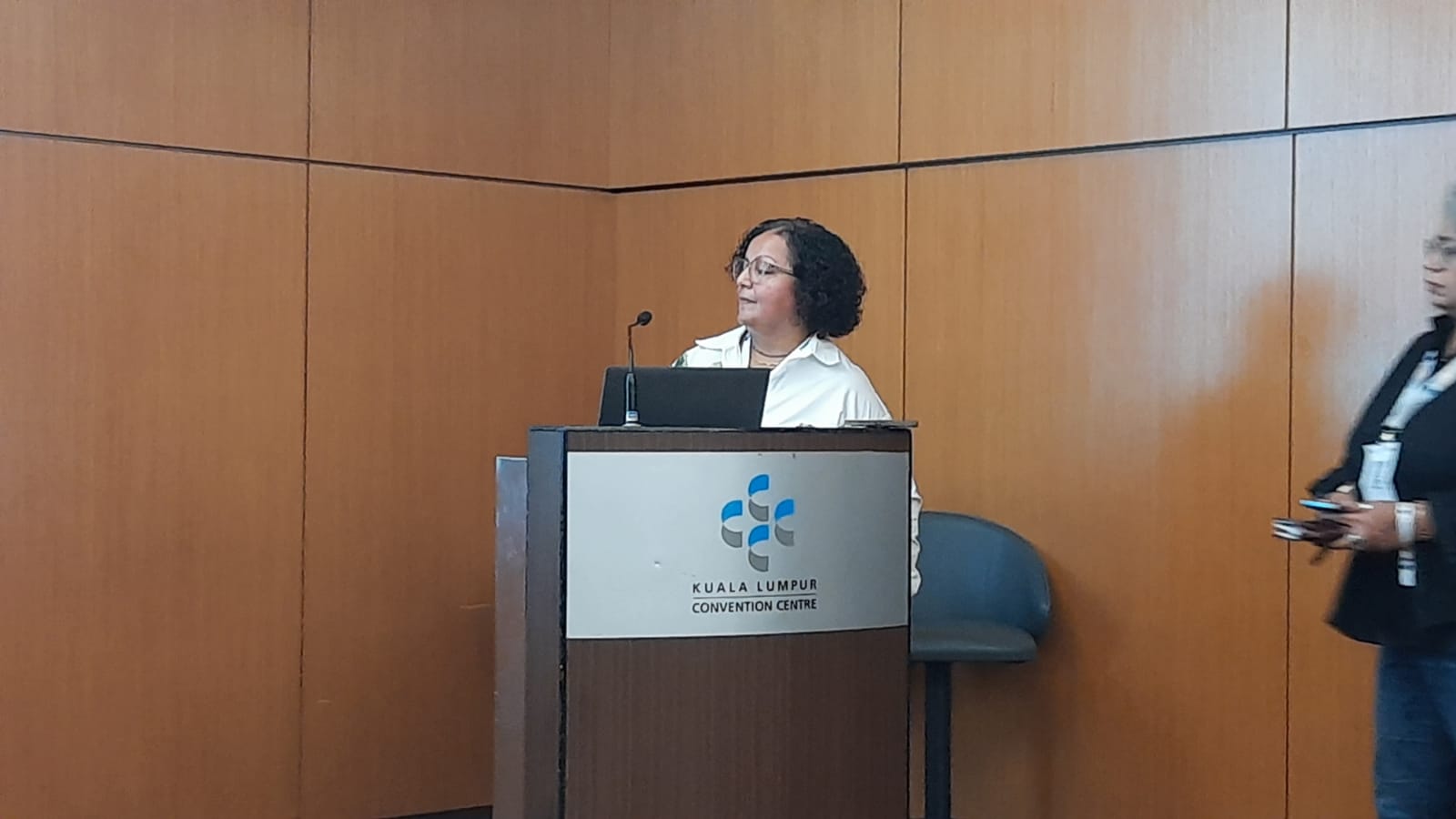
Millions of migrant workers continue to face exploitation in the Middle East. Statistics show that 1.2 million workers in Saudi Arabia alone did not receive their salaries regularly or on time. Half of all migrant workers in the Middle East work in Saudi Arabia, including over 1.5 lakh Bangladeshi workers. Freelance journalist Hana Buhejji warned about how the Kafala (sponsorship) system facilitates wage theft and exploitation of migrant workers in countries such as Saudi Arabia, Oman, Qatar, and Kuwait. She made these remarks during a Day 3 session of the Global Investigative Journalism Conference (GIJC25) titled “Reporting on Business and Labor Issues in the Gulf States.” Buhejji described this exploitation as a long-term, systemic problem affecting millions.
Buhejji identified the Kafala system as the main reason behind migrant worker exploitation in the Middle East. “Workers cannot enter the country, change jobs, or leave without the employer’s permission. This power imbalance makes exploitation possible,” she said.
Although Middle Eastern countries have labor laws in place, many contain loopholes and fail to provide adequate compensation. Workers come to earn money for their families, not to navigate complex legal battles.
This affects approximately 26 million migrant workers, of whom around 80 percent are considered vulnerable. Construction workers make up nearly 80 percent, and domestic workers about 25 percent, making them the most exposed to exploitation.
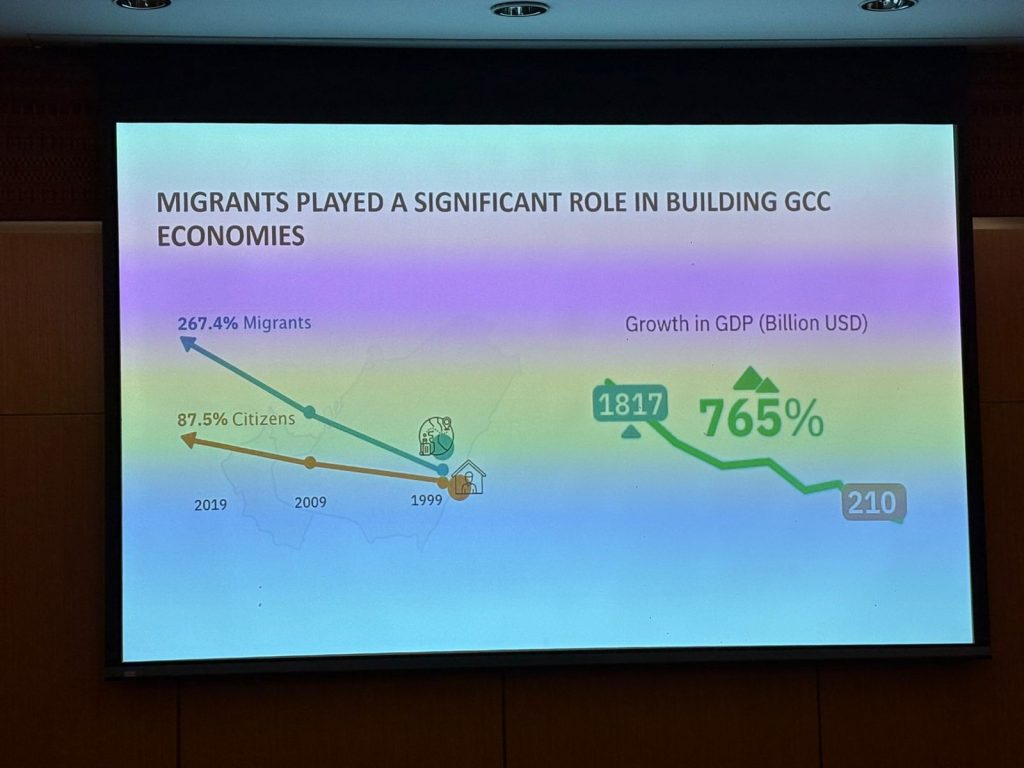
Referring to a leaked Saudi government document, Buhejji stated that 1.2 million workers in Saudi Arabia did not receive their salaries on time or regularly, representing 8.3 percent of the country’s migrant workforce. Migrants make up 80 percent of the Saudi labor market, and the country represents half of the Gulf region’s workforce, highlighting the severity of the Kafala system problem.
Buhejji urged journalists to use accurate terminology, stating that withheld wages should be called “wage theft” rather than just “non-payment.” She also stressed the importance of distinguishing between “illegal” migrants and those “undocumented” or “irregular,” many of whom lose legal status due to employer practices under Kafala.
She warned against normalizing abusive practices such as passport confiscation, denial of days off, restricted communication, excessive working hours, and delayed or withheld wages. According to her research, eight out of eleven common abuses align with international indicators of forced labor.
In conclusion, Buhejji said, “This is not an isolated issue. It is a long-standing, systemic problem affecting millions of workers. Investigative reporting on this topic is essential.”