







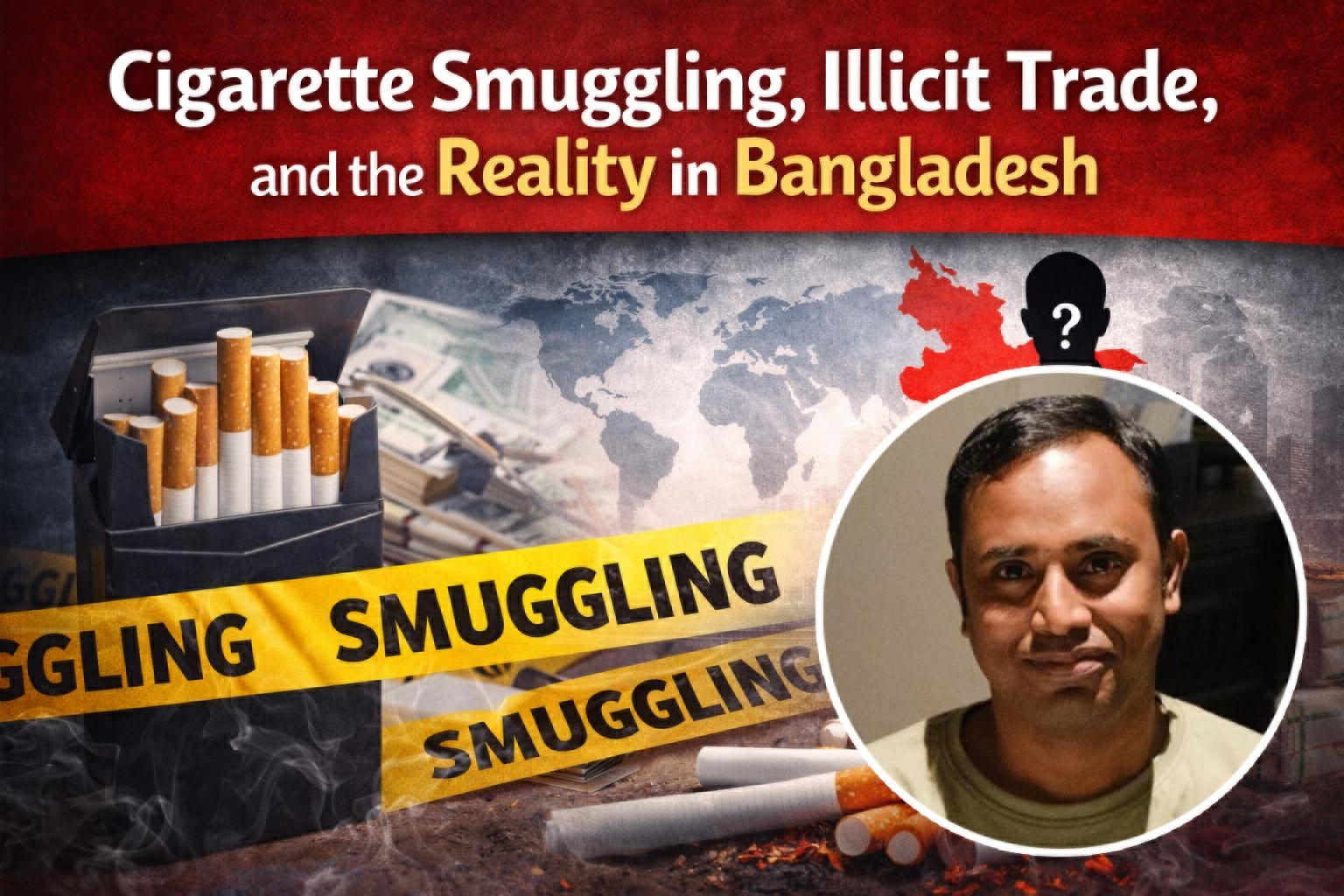
Ibrahim Khalil is a public health researcher. He is working on tobacco taxation, climate change, and public health. An accomplished researcher and writer, Mr. Khalil has authored more than 30 articles published in reputed journals. publichealth24.com spoke with him on 18 March 2026 about Cigarette Smuggling, Illicit Trade, and the Reality in Bangladesh.
Publichealth24.com: There is frequent discussion about cigarette smuggling in Bangladesh. How real is this issue?
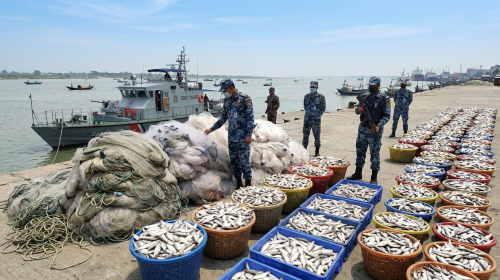
Ibrahim Khalil: The narrative of widespread cigarette smuggling in Bangladesh is largely exaggerated. Research shows that every year, particularly in April and May before the national budget, media reports on cigarette smuggling increase significantly. However, these reports are often repetitive and lack credible evidence—there is usually no clear identification of those involved, and arrests are rare.
In many cases, what is presented as “smuggling” involves small quantities of cigarettes found in unusual circumstances, such as near airport luggage, rather than organized large-scale operations.
Publichealth24.com: Why do you call cigarette smuggling a ‘myth’?
Ibrahim Khalil: From an economic standpoint, the claim does not hold. Cigarettes are often more expensive abroad than in Bangladesh. So, buying cigarettes at a higher price internationally and selling them at a lower price locally would not be profitable.
Additionally, cigarettes are not even listed among the top seized smuggled goods by the National Board of Revenue (NBR). Yet, the issue is often presented as causing massive revenue loss, which is misleading.
Publichealth24.com: Who benefits from promoting this narrative?
Ibrahim Khalil: Evidence suggests that multinational tobacco companies play a role in promoting the idea of widespread smuggling. This narrative is often used strategically to influence government policy—particularly to resist tax increases or regulations like banning single-stick cigarette sales.
Given that over 95% of the cigarette market is controlled by a few large companies, it is highly unlikely that large-scale illegal trade could operate without their awareness.
Publichealth24.com: Is there any evidence of tobacco companies’ involvement in illicit trade?
Ibrahim Khalil: Yes. International research, including reports by Campaign for Tobacco-Free Kids, has documented how certain multinational companies have historically been involved in smuggling operations.
These operations included sophisticated supply chains, use of intermediary trading companies, and strategies like “umbrella operations,” where small legal imports were used to mask much larger illegal flows. Internal documents also indicate that such activities were known at very high levels within these companies.
Publichealth24.com: What is the actual scale of illicit cigarette trade in Bangladesh?
Ibrahim Khalil: A recent peer-reviewed study estimates that illicit cigarette trade accounts for only about 5.4% of the market in Bangladesh. This is far lower than what is often claimed.
However, there are localized issues, such as misuse of tax-free banderoles and involvement of small syndicates, sometimes linked to larger industry networks.
Publichealth24.com: Tobacco companies often argue that higher taxes increase smuggling and reduce revenue. Is this true?
Ibrahim Khalil: No, this claim is not supported by evidence. Government data clearly shows that tobacco tax revenue has consistently increased over the years—from BDT 2,888 crore in 2004–05 to over BDT 40,000 crore in 2024–25.
There has been no instance where tax increases led to a decline in revenue. In fact, higher taxes have contributed to significant revenue growth.
Publichealth24.com: What are the key weaknesses in Bangladesh’s approach to controlling illicit trade?
Ibrahim Khalil: Several gaps hinder effective control of illicit cigarette trade in Bangladesh. There is a lack of a proper licensing system for retail cigarette sellers, and the existing banderole and tax stamp systems are outdated, making it difficult to track products accurately. Coordination between national and local enforcement bodies is limited, which weakens overall monitoring efforts. Additionally, the absence of strong international commitments, such as signing the WHO Protocol on illicit tobacco trade, further undermines enforcement. Together, these gaps make it challenging to effectively prevent and control illegal tobacco activities in the country.
Publichealth24.com: What steps should be taken to address the issue effectively?
Ibrahim Khalil: To effectively control illicit cigarette trade in Bangladesh, several practical measures can be implemented. First, a mandatory licensing system should be introduced for all tobacco retailers to ensure proper monitoring and accountability. Second, local government officials, such as licensing officers and sanitary inspectors, should be included in anti-smuggling committees to strengthen coordination at the grassroots level. Third, tax stamps and cigarette banderoles should be digitized and modernized to improve tracking and reduce opportunities for illegal trade. Finally, the government should sign and implement the WHO Protocol to Eliminate Illicit Trade in Tobacco Products, which provides an internationally recognized framework for combating smuggling. Together, these steps would significantly enhance Bangladesh’s ability to control illicit tobacco trade and protect both public health and government revenue.
Publichealth24.com: What is your final message to policymakers?
Ibrahim Khalil: Policymakers should rely on evidence rather than industry-driven narratives. The myth of widespread cigarette smuggling should not be used to delay important public health measures like tax increases and stronger tobacco control laws.
Effective regulation, transparency, and accountability are key to protecting both public health and government revenue.