ঢাকাবৃহস্পতিবার , ৬ অগাস্ট ২০২৬
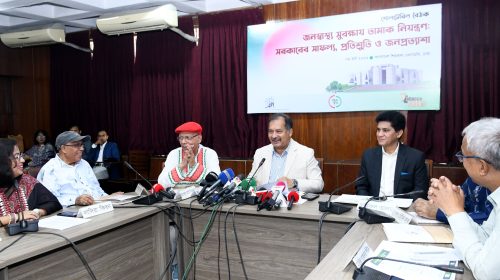
With 35.3 percent of its adult populace (15 y/o and above) hooked on tobacco addiction, the prevalence of tobacco use in Bangladesh is currently at a concerning stage. On average, tobacco claims 548 lives every day, while countless others suffer from disability due to tobacco-related diseases. The economic loss caused by tobacco amounts to approximately BDT 87,000 crore annually. Against this backdrop, experts have cautioned that unless the Smoking and Tobacco Products Use (Control) (Amendment) Ordinance, 2025 is adopted as law in the first session of the National Parliament, the harms and losses caused by tobacco will continue to escalate. Such concerns were raised today, (9 March 2026, Monday), at a roundtable discussion titled “Tobacco Control for Safeguarding Public Health: Government Achievements, Commitments and Public Expectations” organized by PROGGA (Knowledge for Progress) and the Anti-Tobacco Media Alliance (ATMA) at the National Theatre Hall seminar room of the Bangladesh Shilpakala Academy.
Citing World Health Organization (WHO), it was informed that tobacco use is responsible for heart diseases, cancer and other non-communicable diseases (NCDs) which account for roughly 71 percent of all deaths in Bangladesh. The ruling party has made a clear commitment in its election manifesto to adopt effective policy measures to control non-communicable diseases caused by tobacco use, a pledge that is both timely and significant. The Smoking and Tobacco Products Use (Control) (Amendment) Ordinance, 2025, if enacted into law during the first parliamentary session, will help reduce the prevalence of tobacco-related non-communicable diseases as well as the government’s health expenditure.
In his speech as the Chief Guest of the event, Mr. Zahir Uddin Swapon MP, Minister, Ministry of Information and Broadcasting, said, “To fulfill the election commitment, the Tobacco Control Ordinance will be passed as an Act in the upcoming session of Parliament.” He further stated that the Ministry of Information would provide all necessary support to ensure the effective implementation of the Act once it is enacted.
Abdul Hye Sikder, Editor, The Daily Jugantor, said, “There is no alternative to strong tobacco control law to deal with the prevalence of NCDs. I urge the government to ensure quick passage of the amendment to meet public expectation.”
Zahirul Alam, Executive Director, Channel 24, said, ‘Mass media has been playing a strong role in facilitating amendment of tobacco control law. This trend must continue.”
Sohrab Hasan, Editor, online-based news media Chaarcha, said, “The government should pass the ordinance as it is to ensure effective protection of public health.”
Prof. Dr. Golam Mohiuddin Faruq, President, Bangladesh Cancer Society (BCS) who conducted an experience-sharing session of tobacco-induced cancer victims, said, “We have listened to the woes of the victims. Our only plea to the government is that we do not want to hear such harrowing experiences anymore.”
Among other discussants were Mortuza Haider Liton, Convenor of ATMA; ABM Zubair, Executive Director, PROGGA and representatives of a number of anti-tobacco organizations. Nadira Kiron, Co-convener of ATMA hosted the event whereas Hasan Shahriar, Head of Programs, PROGGA presented the key points.
It should be noted that to safeguard the youth from nicotine addiction, the tobacco control ordinance bans the production, import, marketing and use of e-cigarette, vaping and heated tobacco products. The ordinance also ensures protection from the harms of secondhand smoke for women and children by eliminating provision for designated smoking areas (DSAs) in public places and public transport. To further protect the children and adolescents, the ordinance also bans the sale of tobacco products within 100 meters of educational institutions, hospitals and playgrounds. To discourage smoking, it also ensures total ban on the display of tobacco products at points-of-sale and also any sort of advertisement and promotion of tobacco products as well as sponsorship of tobacco companies.